
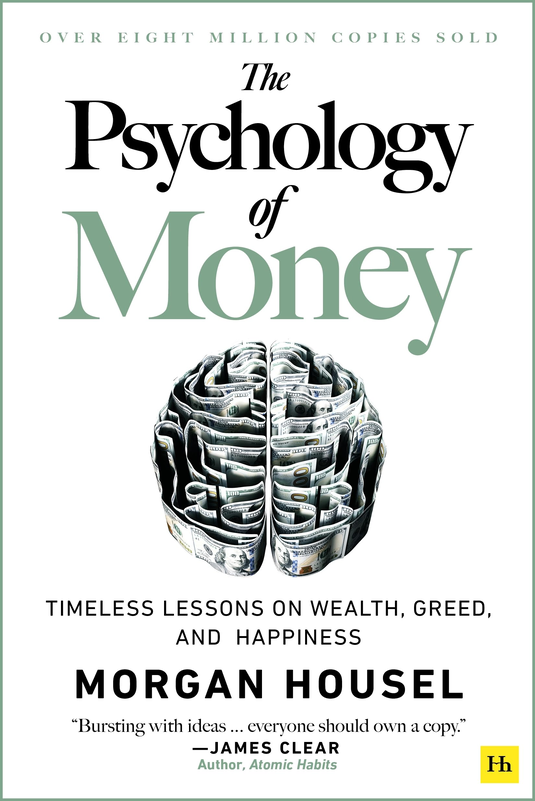
Author: Morgan Housel
Read Time: ~5 Hours
Moneygatha Rating: Rating: ⭐⭐⭐⭐⭐ (4.9/5)
The Lesson: Wealth is what you don’t see
The Verdict: This book is a reality check for Indian investors. Housel proves that Behavior is greater than Intelligence. It doesn’t teach you how to invest; it teaches you how to think so you don’t panic when the market crashes.
The Brutal Truth
Most people think money is like Physics. They think if they memorize the formulas, learn the technical charts, and master Excel sheets, they will become rich.
If that were true, every Accountant and Economics Professor in India would be a billionaire. But they are not.
Why? Because in the real world, people don’t make financial decisions on a spreadsheet. They make them at the dinner table, driven by fear, ego, jealousy, and the desire to show off to their neighbors.
“The Psychology of Money” by Morgan Housel is not a finance book. It is a book about Human Behavior. It doesn’t teach you how to pick stocks; it teaches you how to stop being your own worst enemy.
You absolutely need to read this book if:
- ✅ You earned good returns in the stock market but lost it all trying to “double it” quickly.
- ✅ You feel jealous when you see your friend’s new car on Instagram (even if you know they took a loan for it).
- ✅ You know how to save, but you can’t stop spending because “You only live once.”
If The Richest Man in Babylon taught you the Math (Save 10%), The Psychology of Money teaches you the Mindset (How to keep it).
3 Lessons That Will Change Your Mindset
Morgan Housel shares 20 incredible lessons in the book, but these three are the ones that will hit you the hardest.
1. The “Man in the Car” Paradox
This is a brutal reality check for anyone who loves cars or gadgets.
Housel writes that when you see someone driving a cool car (like a Thar, Fortuner, or BMW), you rarely think, “Wow, the guy driving that car is so cool.” Instead, you think, “Wow, if I had that car, people would think I am cool.”
The Paradox: No one is looking at you. They are too busy imagining themselves in your seat.
We spend lakhs of rupees buying things to impress strangers who don’t even care about us.
The Moneygatha Takeaway: Stop buying things to impress people you don’t even like. True wealth is hidden. It is the nice car not purchased. It is the diamond not bought. Wealth is an option not yet taken.
2. Getting Rich vs. Staying Rich
These are two completely different skills.
- Getting Rich requires optimism. You need to take risks, start a business, or invest in a volatile stock market.
- Staying Rich requires paranoia. You need to be scared that everything you made can be taken away.
Housel gives the example of Jesse Livermore, one of the greatest traders in history. He made $100 million in 1929 when everyone else went broke. He was a genius at getting rich. But he didn’t know how to stay rich. He kept taking massive risks, lost everything, and eventually took his own life.
The Lesson: Survival is the only thing that matters. If you can just survive the bad times without selling your stocks, the good times will make you rich automatically.
3. The Highest Dividend: Control Over Time
Why do we actually want to be rich? Is it for the Ferraris? The big bungalows? No. The highest form of wealth is the ability to wake up every morning and say, “I can do whatever I want today.”
- If you have ₹50,000 in savings, you can survive a month without a salary.
- If you have ₹10 Lakhs, you can leave a toxic boss and take 6 months to find a better job.
- If you have ₹1 Crore, you own your time completely.
Money’s greatest intrinsic value—and this can’t be overstated—is its ability to give you control over your time.
The Moneygatha Verdict: Don’t aim for the highest returns. Aim for the highest independence. If your job pays you ₹3 Lakhs a month but you have to work 16 hours a day and answer emails on Sunday, you are not rich. You are just a well-paid slave.
Top 3 Quotes
“Spending money to show people how much money you have is the fastest way to have less money.”
“Planning is important, but the most important part of every plan is to plan on the plan not going according to plan.”
“Use money to gain control over your time, because not having control of your time is a powerful and universal drag on happiness.”
Who Should Read This?
✅ Read this if:
- You are a beginner investor and feel intimidated by charts and numbers.
- You find yourself “impulse buying” things you don’t need (like the latest iPhone).
- You want to understand why you feel jealous of other people’s wealth.
- You prefer stories and psychology over math and formulas.
❌ Skip this if:
- You are looking for “Hot Stock Tips” or technical analysis.
- You want a “Get Rich Quick” scheme (this book is about getting rich slowly).
Frequently Asked Questions
Is The Psychology of Money good for beginners? Yes, absolutely. It is one of the best books for beginners because it uses zero jargon. There are no complex charts or math formulas—just stories about human behavior.
What is the main message of the book? The main message is that doing well with money has little to do with how smart you are and a lot to do with how you behave. Managing your ego and emotions is more important than managing your investment portfolio.
Is it better than Rich Dad Poor Dad? They are different. Rich Dad Poor Dad focuses on real estate and entrepreneurship. The Psychology of Money focuses on mindset, saving, and the emotional side of investing. We recommend reading both.
A Quiet Continuation
Many of the ideas in this book show up repeatedly in real life.
- The way financial anxiety lingers even after numbers improve.
- The way playing safe can feel smart but still limit movement.
- The way income can grow without creating relief.
- And the way structure matters more than effort alone.
I’ve explored those patterns separately as well, because they don’t end with one book.
Final Verdict
If you only read one finance book in 2026, make it this one.
The Richest Man in Babylon gave us the rules. The Psychology of Money gives us the therapy we need to follow those rules. It will stop you from making stupid mistakes when the market crashes.
Loved this review? Explore the full Moneygatha book library to master your mindset, strategy, and discipline.