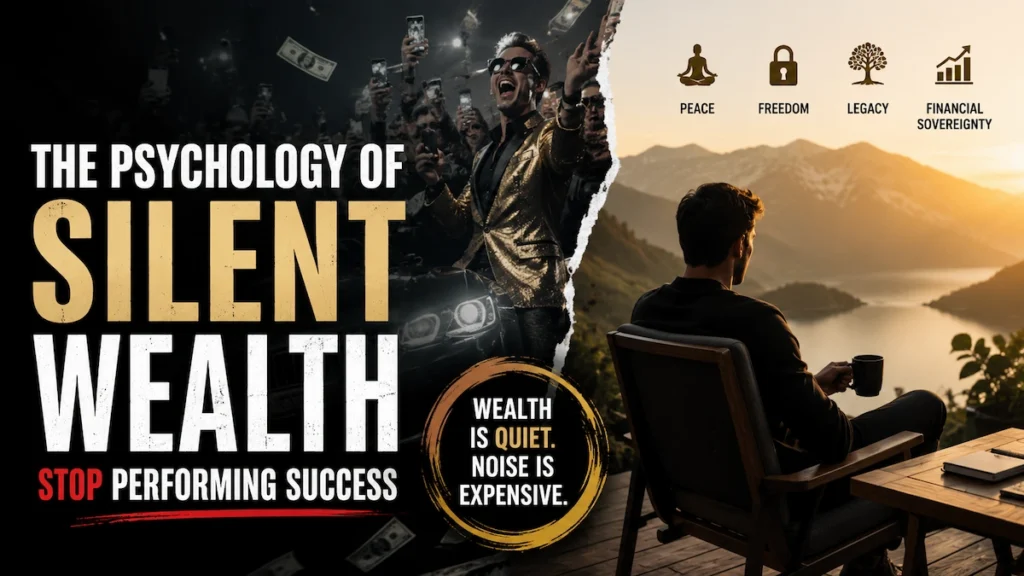
Illustration showing the psychology of silent wealth, contrasting performative success and luxury with inner peace, financial freedom, and quiet wealth.

The Psychology of Silent Wealth: Stop Performing Success

Most people are not building wealth. They are performing success for an audience that is too distracted to care. Silent wealth begins the moment you stop needing validation, escape the noise of status, and build a life so internally stable that it no longer depends on applause.

Illustration showing the contrast between spending vs saving, where every dollar acts as a vote for financial freedom or debt-driven consumerism.

Spending vs Saving: Every Dollar Is a Vote for Your Future

Your wallet is not a tool. It is a voting machine deciding who controls your future. Every impulsive purchase trades a piece of your life-force for temporary comfort, while every saved dollar buys silence, autonomy, and the power to walk away. The real battle of spending vs saving is not financial—it is spiritual.

Lifestyle inflation concept showing luxury success versus financial freedom and escaping the hedonic treadmill

How to Avoid Lifestyle Inflation: Escape the Treadmill

Success was supposed to buy freedom. Instead, it quietly sold you a more expensive prison. This brutal deep dive into lifestyle inflation and the hedonic treadmill reveals why high earners still feel trapped, anxious, and emotionally owned by their desires—and how real wealth begins the moment you stop needing constant upgrades to feel worthy.

Illustration showing the contrast between flashy fake wealth and quiet financial freedom, explaining why wealthy people often look ordinary instead of rich.

Why Wealthy People Don’t Look Rich Anymore

Most wealthy people no longer try to look rich. This deep psychological exploration reveals how silent wealth, financial freedom, and invisible success quietly outperform status-driven lifestyles and luxury performance.

Illustration of a long-term investor walking toward financial freedom showing compounding growth, patience, and disciplined investing journey

Think Like a Long-Term Investor to Build Real Wealth

Most people stay busy with money but never build real wealth. This blog reveals how a long-term investor mindset, patience, and compounding create lasting financial growth. Discover why doing less—but staying consistent—matters more than chasing quick returns.

Margin of safety rule illustration showing protection shield against market crash and buying below intrinsic value for safer investing

Margin of Safety Rule That Protects You in Market Crashes

Most investors fear market crashes—but the real danger begins earlier. This guide explains the margin of safety rule, a core value investing strategy that helps you buy below intrinsic value, reduce risk, and protect your capital when markets fall. Learn how to calculate margin of safety, avoid overpaying, and build long-term wealth with disciplined investing.

Illustration of investor psychology cycle showing why investors panic buy and sell during market volatility

Why Investors Panic Buy and Sell (Cycle Explained)

Why do investors panic buy and sell?
Because emotions—not logic—drive most decisions in volatile markets. This guide explains the investor psychology cycle and shows how fear and greed lead to buying high and selling low—and how to break that pattern.

Illustration of calm investor during stock market volatility and panic

Why Market Volatility Scares Most Investors Today

The market falls… and fear takes over. But the real problem isn’t volatility—it’s a lack of understanding. Most investors ignore value investing basics, react emotionally, and lose control when prices move. This blog reveals why market volatility feels dangerous and how awareness—not prediction—is the key to staying calm and investing wisely.