
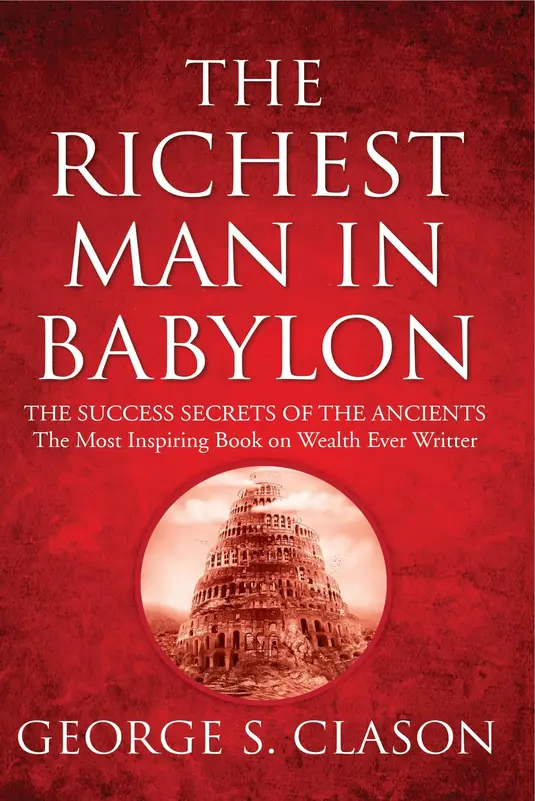
Author: George S. Clason
Read Time: 4 Hours
Moneygatha Rating: ⭐⭐⭐⭐⭐ (5/5)
The Lesson: Pay Yourself First
The Verdict: This is the “Bible” of personal finance. Written in 1926, its advice is timeless. If you are drowning in debt or have zero savings, this book gives you the exact mathematical formula to get out. It is simple, practical, and works for everyone.
The Brutal Truth
Most finance books feel like a college lecture. They are painful to read because they confuse you with:
- Complex stock market graphs that make no sense.
- Heavy words like “Asset Allocation” and “P/E Ratios.”
- Advice that only works if you are already rich (like “Buy Real Estate”).
The Richest Man in Babylon is different. It doesn’t lecture you; it tells you a story. But don’t let the “story” fool you—it is a brutal reality check.
You absolutely need to read this book if:
- ✅ You earn ₹30,000+ but have ₹0 in your account on the 28th of the month.
- ✅ You think, “I will start saving when I earn more,” but you never do.
- ✅ You have a Credit Card EMI that eats 20% of your salary.
- ✅ You feel like you work hard, but your money disappears into thin air.
If you ticked any of the boxes above, this book is not a suggestion. It is a requirement.
The Richest Man in Babylon vs. Rich Dad Poor Dad
If you are new to finance, you likely have both of these books on your list. Which one should you read first?
While Rich Dad Poor Dad is the most famous finance book in the world, it has a flaw: it focuses on Mindset, not Mechanics.
- Rich Dad Poor Dad teaches you WHY you should be rich. It tells you that a job is a trap and you need to acquire assets. But it doesn’t give you a step-by-step calculator on how to do it.
- The Richest Man in Babylon teaches you HOW to be rich. It is the manual. It tells you exactly how to squeeze money out of your current salary to start buying those assets.
The Moneygatha Verdict: Read The Richest Man in Babylon first. You cannot become a “Rich Dad” if you don’t have the discipline to save the first 10% of your income. Master the discipline here, then read Kiyosaki for the motivation.
The 5 Laws of Gold (Simplified)
The entire wisdom of the book is summarized in five ancient laws. While the story is set in Babylon, these rules apply perfectly to your salary in 2026.
1. Gold comes to those who save If you do not save at least 1/10th (10%) of your earnings, money will run away from you. This is the foundation of wealth. It doesn’t matter if you earn ₹20k or ₹2 Lakhs—if you spend it all, you are poor.
2. Gold works for its owner Money sitting in a Savings Account (getting 3% interest) is lazy. Money invested in a Mutual Fund, Stock, or Business is working hard. Your goal is to make your children (your money) earn more children for you.
3. Gold clings to the cautious owner Do not trust your money to inexperienced people. If your friend asks for ₹50,000 to start a “business” but has no experience, you will lose that money. Invest only where the principal is safe.
4. Gold slips away from the ignorant If you invest in things you do not understand (like buying a specific crypto or stock just because a YouTuber said so), you are gambling, not investing.
5. Gold flees the greedy Avoid impossible returns. If a scheme promises you “20% returns in one month,” it is a scam. The Babylonians knew this 4,000 years ago, and it is still true today.
The 70-20-10 Rule (Applied to Indian Salaries)
The book doesn’t just say “save money.” It gives you a strict budget called the 70-20-10 Rule.
- 70% for Living: Rent, food, travel, and electricity.
- 20% for Debt/Goals: Paying off loans or saving for big purchases.
- 10% for “Yours to Keep”: This money never gets spent. It gets invested.
Here is exactly how this looks for different salary levels in India:
| Monthly Salary | Living Expenses (70%) | Debt/Goals (20%) | Yours to Keep (10%) |
| ₹ 30,000 | ₹ 21,000 | ₹ 6,000 | ₹ 3,000 |
| ₹ 50,000 | ₹ 35,000 | ₹ 10,000 | ₹ 5,000 |
| ₹ 1,00,000 | ₹ 70,000 | ₹ 20,000 | ₹ 10,000 |
The Strategy: When your salary comes on the 1st of the month, transfer the 10% (The “Yours to Keep” amount) immediately to a separate account or SIP. Do not wait until the end of the month—it will be gone by then.
Frequently Asked Questions
Is this book outdated? No. The stories are set in 4,000 BC, but the math is timeless. Gravity hasn’t changed, and neither has money. The laws of wealth are the same today as they were in ancient Babylon.
Is it hard to read? The English is “Old Style” (using words like “Thou” and “Thy”). It can be annoying for the first 10 pages. But once you get used to the rhythm, it feels like listening to a wise grandfather.
Can I just watch a YouTube summary instead? You could, but you shouldn’t. A summary gives you information; the stories in the book give you a mindset shift. You need to read the parables to truly understand the lesson.
Loved this review? Explore the full Moneygatha book library to master your mindset, strategy, and discipline.