
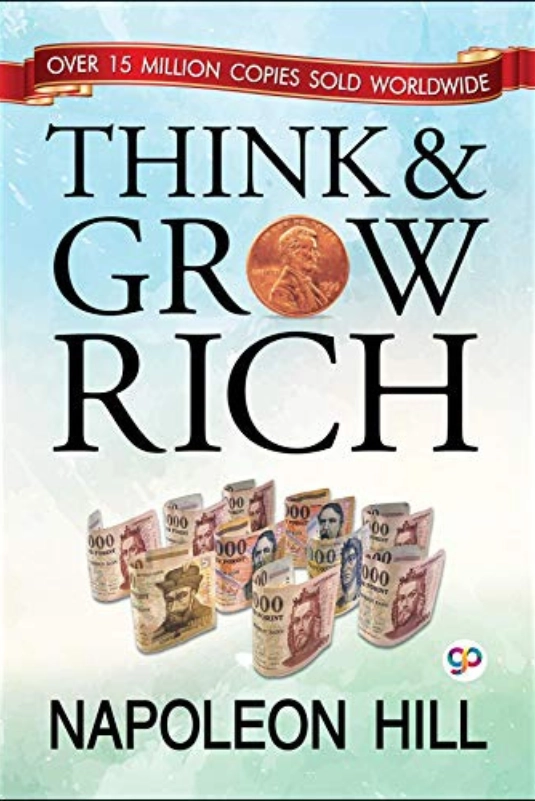
Author: Napoleon Hill
Read Time: 6–8 Hours
Moneygatha Rating: ⭐⭐⭐⭐⭐ (5/5)
The Lesson: Your mind creates your reality before your actions create your wealth.
The Verdict: Think and Grow Rich is more than a book about money—it is a book about mindset. Published in 1937, its timeless principles on desire, faith, persistence, and action have influenced millions worldwide. While some ideas feel philosophical rather than scientific, the core message remains powerful: lasting wealth begins with the way you think before it appears in your bank account.
Most people spend their lives chasing money.
Very few stop to ask whether the real prison is their own thinking.
Wealth begins in the mind long before it appears in a bank account.
This Think and Grow Rich review explores Napoleon Hill’s classic personal development book that teaches the mindset and principles behind wealth creation. Through 13 success principles, it emphasizes that financial success begins with desire, faith, persistence, and disciplined action. More than a money book, it is a guide to transforming the way you think about success and achievement.
I picked up this book expecting to learn about money.
Instead, it forced me to question the beliefs that shaped my entire relationship with success.
The biggest lesson wasn’t how to earn more.
It was realizing that every external result begins as an internal thought.
Contents
What Is Think and Grow Rich About?
At first glance, this looks like a book about becoming rich.
It isn’t.
Money is only the visible result.
The real subject of the book is the invisible process that creates it.
Written after studying some of the world’s most successful people, Napoleon Hill argues that success is rarely an accident but the result of disciplined thinking and deliberate action.
The central idea is simple:
Every great achievement begins as an idea that refuses to leave your mind until you give it a place in reality.
Instead of offering investment strategies or budgeting techniques, the book introduces 13 principles of success that help shape your mindset, decisions, and daily habits.
These principles include desire, faith, autosuggestion, persistence, organized planning, the mastermind principle, and several others that work together as a complete philosophy for achieving success.
The book quietly challenges one dangerous belief:
That successful people simply got lucky.
It is the result of repeated thoughts, intentional actions, and unwavering persistence.
That is why this classic has remained one of the most influential personal development books for decades.
Its lessons extend far beyond money, encouraging readers to build a life driven by purpose, discipline, and self-belief rather than fear and circumstance.
The 13 Principles of Think and Grow Rich Explained
At the heart of the book are 13 timeless principles that Napoleon Hill believed separate ordinary thinking from extraordinary achievement.
Read separately, these principles seem ordinary.
Practiced together, they become a blueprint for extraordinary achievement.
While the book is often associated with money, these lessons apply equally to business, career growth, relationships, and personal development.
Here’s a quick overview of the 13 principles:
| Principle | Core Lesson |
|---|---|
| Desire | Every achievement begins with a clear and burning desire. |
| Faith | Belief in your goal gives you the courage to pursue it. |
| Autosuggestion | Repeated thoughts gradually shape your subconscious mind and actions. |
| Specialized Knowledge | Knowledge creates value only when it is applied with purpose. |
| Imagination | Every fortune starts as an idea before it becomes reality. |
| Organized Planning | Dreams require practical plans and consistent execution. |
| Decision | Successful people make decisions confidently and change them slowly. |
| Persistence | The ability to keep going despite setbacks separates winners from quitters. |
| The Mastermind | The right people can multiply your ideas, opportunities, and growth. |
| Sex Transmutation | Creative energy can be redirected into productive achievement. |
| The Subconscious Mind | Your dominant thoughts influence your habits and future actions. |
| The Brain | A trained mind can receive, organize, and transmit powerful ideas. |
| The Sixth Sense | Intuition develops through experience, awareness, and disciplined thinking. |
Reading these principles once is easy.
Living them is the real challenge.
Some ideas may feel philosophical, while others are surprisingly practical, but together they encourage a fundamental shift in how you approach success.
In the next sections, I’ll share the five principles that had the greatest impact on my thinking and explain why they remain relevant even decades after the book was first published.
The Five Biggest Lessons I Took From the Book
Most people pick up this book looking for a shortcut to wealth.
I finished it with a completely different realization.
The biggest obstacle to success was never my bank balance.
It was the invisible beliefs controlling my decisions every single day.
These are the five lessons that stayed with me long after I closed the book.
1. Wealth Is Created Twice
Every building exists as a blueprint before it becomes concrete.
Every business exists as an idea before it becomes reality.
The same is true for wealth.
Your external results rarely grow beyond your internal beliefs.
If your mind constantly expects scarcity, your actions will quietly create it.
2. Desire Is More Powerful Than Talent
Many intelligent people never achieve extraordinary success.
Not because they lack ability.
Because they lack obsession.
A clear, burning desire gives ordinary people the strength to outlast extraordinary talent.
Talent opens the door.
Desire keeps walking when everyone else turns back.
3. Your Environment Quietly Shapes Your Future
The people around you influence your standards more than your goals.
Spend enough time with people who complain, and excuses become normal.
Spend enough time with people who create, build, and solve problems, and growth becomes natural.
Success is rarely a solo journey.
It is often a reflection of the conversations you have every day.
4. Most People Quit Just Before Life Changes
Failure is uncomfortable.
But uncertainty is what causes most people to stop.
They assume nothing is happening because they cannot see immediate results.
This book reminded me that persistence is not blind optimism.
It is trusting the process long enough for reality to catch up with your effort.
5. The Greatest Investment Is Your Mind
We spend years trying to earn more money.
Very few spend the same energy upgrading the beliefs that determine how that money is earned, managed, and multiplied.
Looking back, I realized my income had never been the ceiling.
My thinking was.
That may be the most uncomfortable lesson in the entire book.
Because it leaves no one else to blame.
After finishing the book, I stopped measuring wealth by money alone.
I started measuring it by the quality of my decisions.
Because every fortune is built one decision at a time.
And perhaps that is the real reason this book has remained relevant for generations.
What I Loved About Think and Grow Rich
The greatest strength of this book is that it doesn’t teach you how to make money.
It teaches you how to become the kind of person who can create wealth repeatedly.
Most finance books focus on strategies.
Napoleon Hill focuses on the mind behind those strategies.
That shift alone makes this book different.
I also appreciated that the principles are not tied to a particular country, economy, or profession.
Whether you are building a business, starting a career, or pursuing a personal goal, the ideas remain surprisingly relevant.
Another reason this book stands out is that it places responsibility back into the reader’s hands. Instead of blaming luck, the economy, or circumstances, it repeatedly asks one uncomfortable question:
“What if the biggest obstacle is the way you think?”
That message feels just as powerful today as it did decades ago.
Finally, this is one of those rare books that refuses to let the reader stay comfortable.
It doesn’t promise quick wealth.
It asks difficult questions.
Do you really know what you want?
Are you willing to persist when nobody believes in you?
Are your daily actions aligned with your biggest goal?
For me, its value was never in providing magical formulas.
Its real gift was changing the questions I asked myself.
And better questions often lead to a better life.
What I Didn’t Like About the Book
No book is perfect.
And I don’t believe this one is either.
The first thing that stood out to me is that many of the ideas are presented as universal truths without much evidence to support them. Readers looking for data-driven financial advice or scientific explanations may find some chapters too philosophical.
Some concepts, such as The Sixth Sense and Sex Transmutation, can also feel difficult to relate to, especially for modern readers. They require interpretation rather than literal acceptance, which may not appeal to everyone.
The writing style is another challenge.
Published in 1937, the language is formal and repetitive at times. Certain ideas are revisited multiple times, making the book feel longer than necessary.
I also think one mistake readers make is treating the book like a step-by-step formula for becoming rich.
It isn’t.
It offers a philosophy, not a guaranteed blueprint.
Without consistent action, the principles remain inspiring words on paper.
Despite these criticisms, none of them reduce the value of the book for me.
In fact, they made me read it more thoughtfully.
Instead of accepting every claim blindly, I focused on the timeless ideas that have practical value in everyday life.
And perhaps that’s the best way to approach any classic—not as absolute truth, but as a conversation that challenges the way you think.
Is Think and Grow Rich Still Worth Reading?
Yes—but only if you’re willing to think differently.
If you’re expecting a modern finance book filled with investment strategies, budgeting techniques, or stock market advice, this may not be the right choice.
But if you’re looking for a book that challenges your beliefs about success, wealth, and personal responsibility, this timeless classic remains one of the most influential books ever written.
Its greatest strength is that it doesn’t chase trends.
The core ideas—clarity of purpose, persistence, disciplined thinking, and surrounding yourself with the right people—are just as relevant today as they were decades ago.
That said, I wouldn’t recommend reading it passively.
Read it with a notebook.
Question its ideas.
Test its principles in your own life.
Some chapters may feel outdated, and some concepts may not resonate with everyone, but the underlying message still carries remarkable power.
So, is Think and Grow Rich worth reading?
Absolutely.
Not because it will make you rich overnight.
But because it may change the way you think about success forever.
And once your thinking changes, your actions often follow.
Who Should Read This Book?
This book is not for everyone.
It is not a book that gives you quick money hacks or promises overnight success.
Instead, it asks you to examine the way you think, the habits you repeat, and the beliefs quietly shaping your future.
Read this book if you’ve ever worked hard and still felt stuck.
Read it if you believe you’re capable of more but keep repeating the same patterns.
Read it if you want to understand why two people with similar opportunities can end up living completely different lives.
This book won’t change your bank account overnight.
But it may change the person making the financial decisions.
On the other hand, if you’re looking for practical advice on investing, budgeting, or managing debt, you’ll probably benefit more from reading a modern personal finance book first and returning to this one later.
The people who gain the most from it are not those searching for a secret formula.
They are the ones willing to question their assumptions, challenge limiting beliefs, and take consistent action long after motivation fades.
Because in the end, the greatest lesson this book offers is simple:
Your future is shaped less by what happens to you and more by the thoughts you choose to believe every single day.
Final Verdict
Most people search for books that teach them how to make money.
Think and Grow Rich teaches something far more dangerous.
The real wealth this book offers is not money.
It is the ability to think independently in a world that rewards conformity.
Read this book not to become rich.
Read it to become the person who can never stay poor.
A classic quote from Think and Grow Rich:
“Whatever the mind can conceive and believe, it can achieve.”
— Napoleon Hill
It’s one of the most iconic lines from the book and perfectly captures its central philosophy.
Frequently Asked Questions
How many principles are there in Think and Grow Rich?
Think and Grow Rich is built around 13 success principles developed by Napoleon Hill. These principles, including desire, faith, persistence, and the mastermind concept, are designed to help readers develop the mindset and habits needed to achieve long-term success.
Is Think and Grow Rich based on true stories?
The book draws inspiration from Napoleon Hill’s study of many successful individuals, including well-known business leaders of his time. While some stories are based on real experiences, readers should approach them as motivational examples rather than scientifically verified case studies.
Can beginners read Think and Grow Rich?
Yes. Although the language feels dated in some places, the ideas are easy to understand and can benefit beginners interested in personal growth, wealth building, and developing a success-oriented mindset.
What is the most important principle in Think and Grow Rich?
Many readers consider Desire to be the foundation of the entire book because Napoleon Hill argues that every great achievement begins with a clear and burning desire. However, the real power comes from applying all 13 principles together rather than relying on just one.
Is Think and Grow Rich about money or mindset?
Despite its title, Think and Grow Rich is fundamentally a book about mindset. Napoleon Hill argues that lasting success begins with your beliefs, decisions, habits, and persistence long before it appears as financial wealth. The book uses money as the outcome, but its real focus is transforming the way you think.
Don’t stop with one book.
One insight creates curiosity.
A lifetime of reading creates freedom.